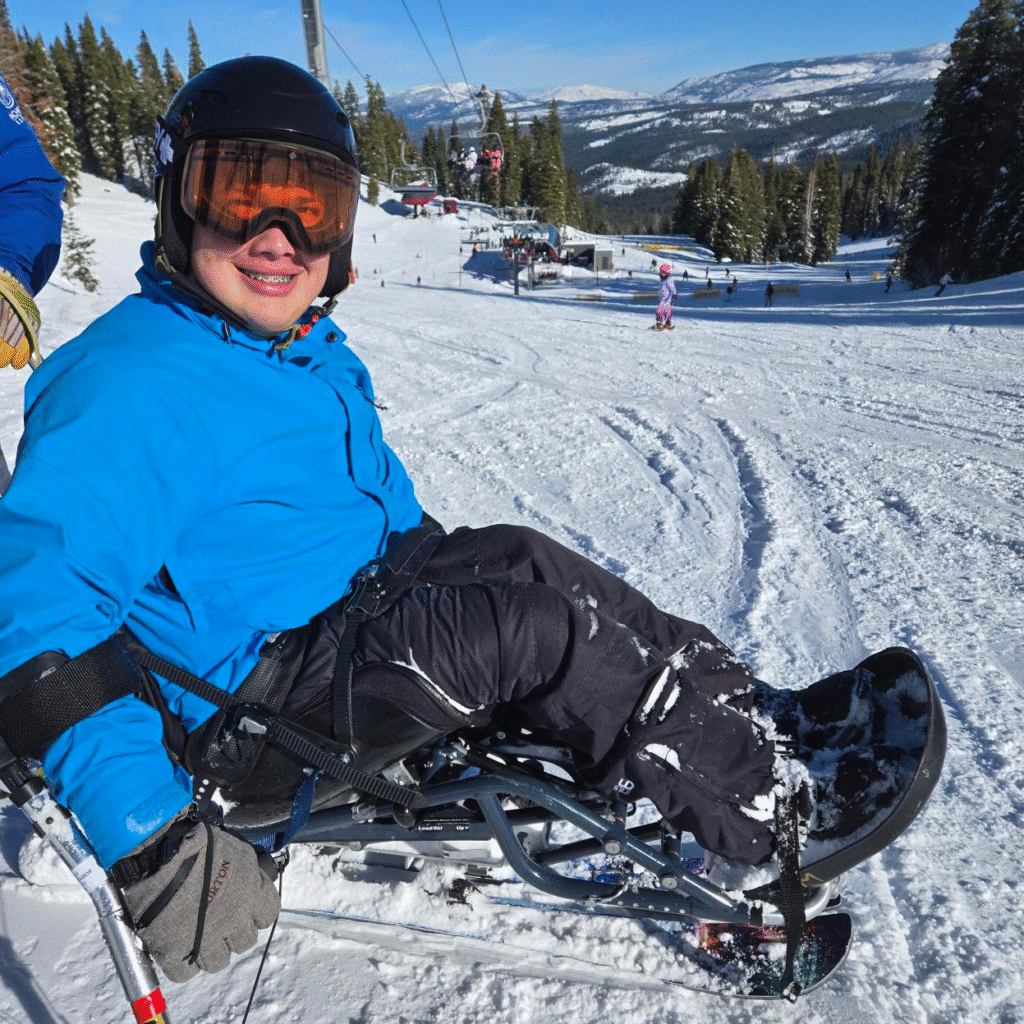
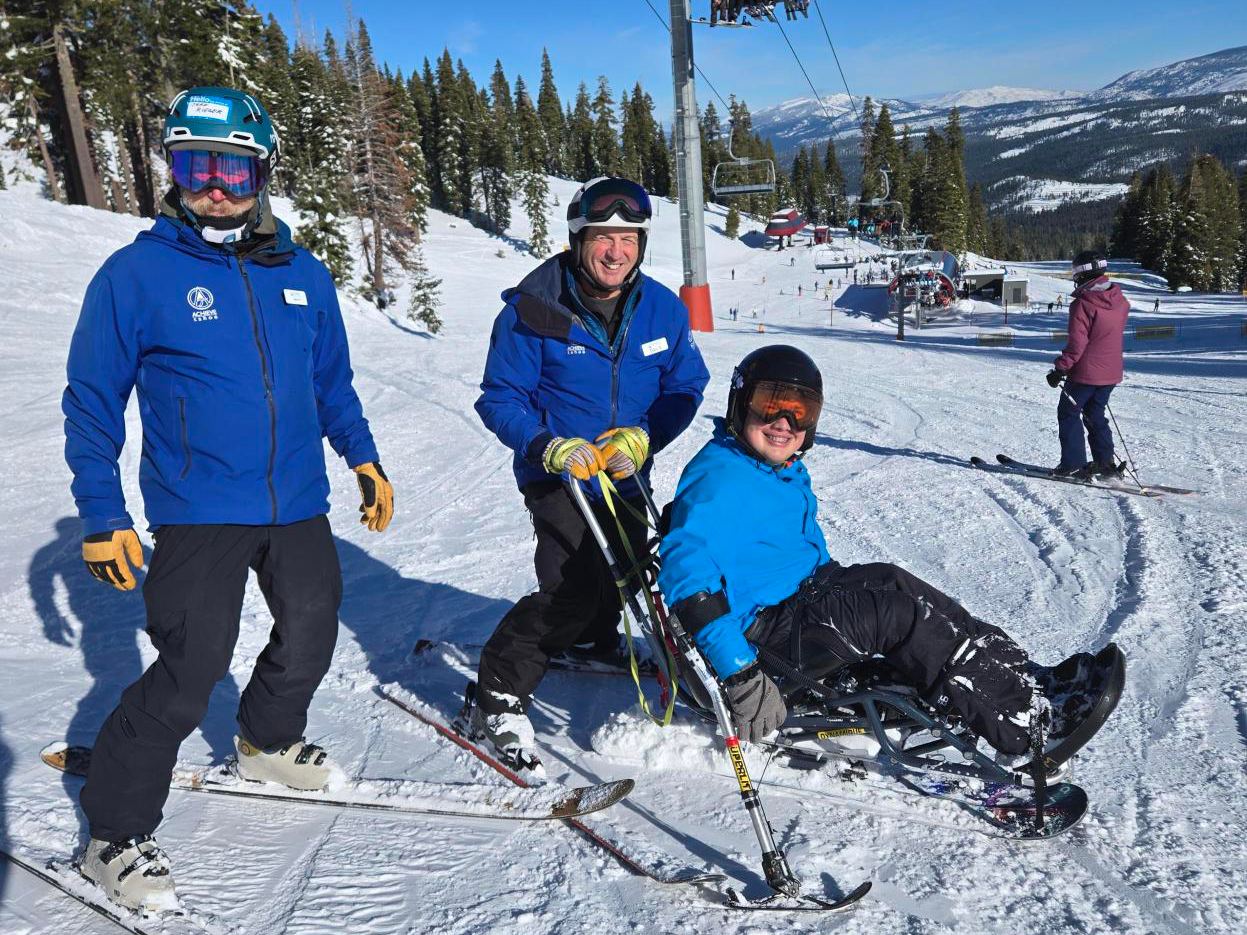
Spina bifida is a permanently disabling birth defect that affects mobility, balance, and stamina throughout a person’s life. For many, these challenges can limit access to activities most families take for granted. But for the Gallego family, their son Fernando’s spina bifida diagnosis didn’t prevent them from enjoying a family ski trip over the holidays – it simply meant finding the right support to make it possible.
15-year-old Fernando has been skiing for about five years, first learning through The United States Adaptive Recreation Center in Big Bear before continuing his journey with Achieve Tahoe. Adaptive instruction and equipment have allowed Fernando not only to ski, but to take part in family time on the mountain.
On the slopes, Fernando uses a bi-ski, a sit-ski designed to provide added stability and control. While he is able to walk and has tried stand-up skiing with mechanical assistance, spina bifida limits his lower leg mobility and balance and causes his legs and back to fatigue quickly when standing. Using a bi-ski allows Fernando to ski safely, confidently, and with less risk of injury – demonstrating how adaptive equipment meets athletes where they are, rather than forcing them into a one-size-fits-all approach.
During the Gallego family’s recent visit to Tahoe, Fernando was eager to spend as much time on the mountain as possible. Skiing became a true family affair. Fernando’s mom and dad, his sisters, and even his cousins joined Fernando on the slopes. Thanks to Achieve Tahoe, the mountain became a shared space where everyone could participate together.
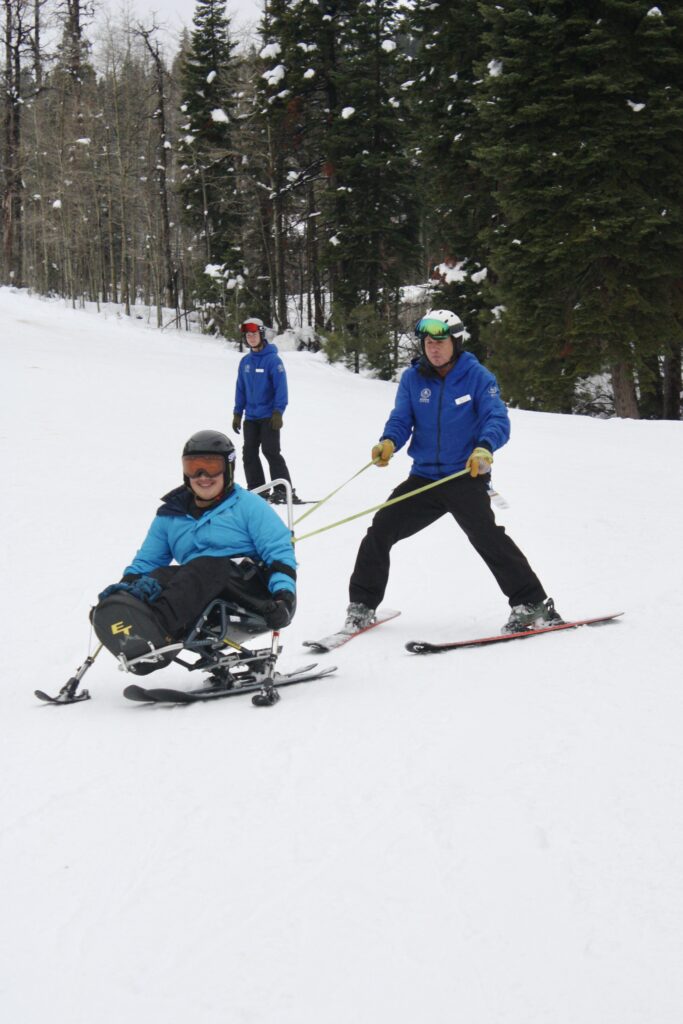
After a full week of lessons, Fernando felt proud of his progress. He is now confident skiing green runs with little to no assistance. While fatigue cut his ski days shorter than he hoped, the experience motivated him to keep training and building stamina so he can ski longer and harder in the future. Most of all, he couldn’t wait to return home and tell his friends about his holiday break and the incredible time he spent outdoors with his family.
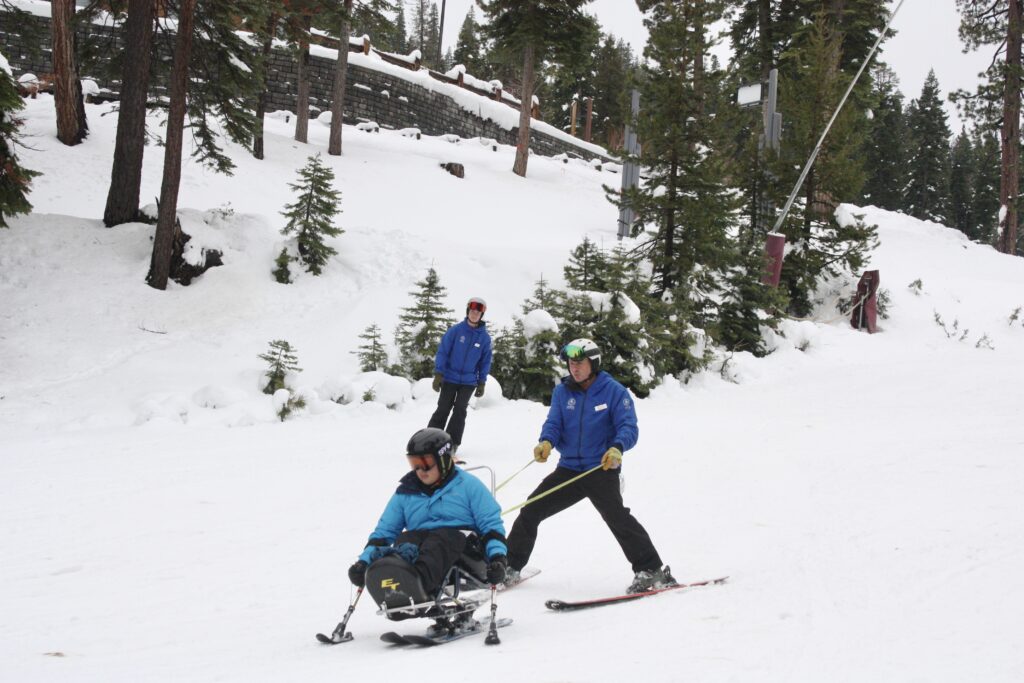
While skiing is a highlight, it’s just one part of Fernando’s active life. A lifelong athlete, he began playing wheelchair basketball at age 12 before transitioning to wheelchair tennis two years ago after attending an all-adaptive sports camp at the University of Arizona. There, he fell in love with the sport. Today, Fernando trains three to four times a week, competes in national and regional tournaments, and is preparing for his next competition in Tucson this March. He also practices archery at the Olympic Training Center in Chula Vista.
For Fernando, sports are about far more than competition. He says they help him get closer to having an independent life. He has a goal to travel to tennis tournaments and matches by himself, and he feels a strong sense of belonging within the disabled athlete community.
Fernando’s journey is just one example of what your support makes possible. Every lesson, piece of adaptive equipment, and trained instructor exists because Achieve Tahoe donors choose to invest in inclusion. With your continued generosity, Achieve Tahoe can reach more athletes, support more families, and ensure that disabilities never stand in the way of belonging – on the slopes and beyond.