
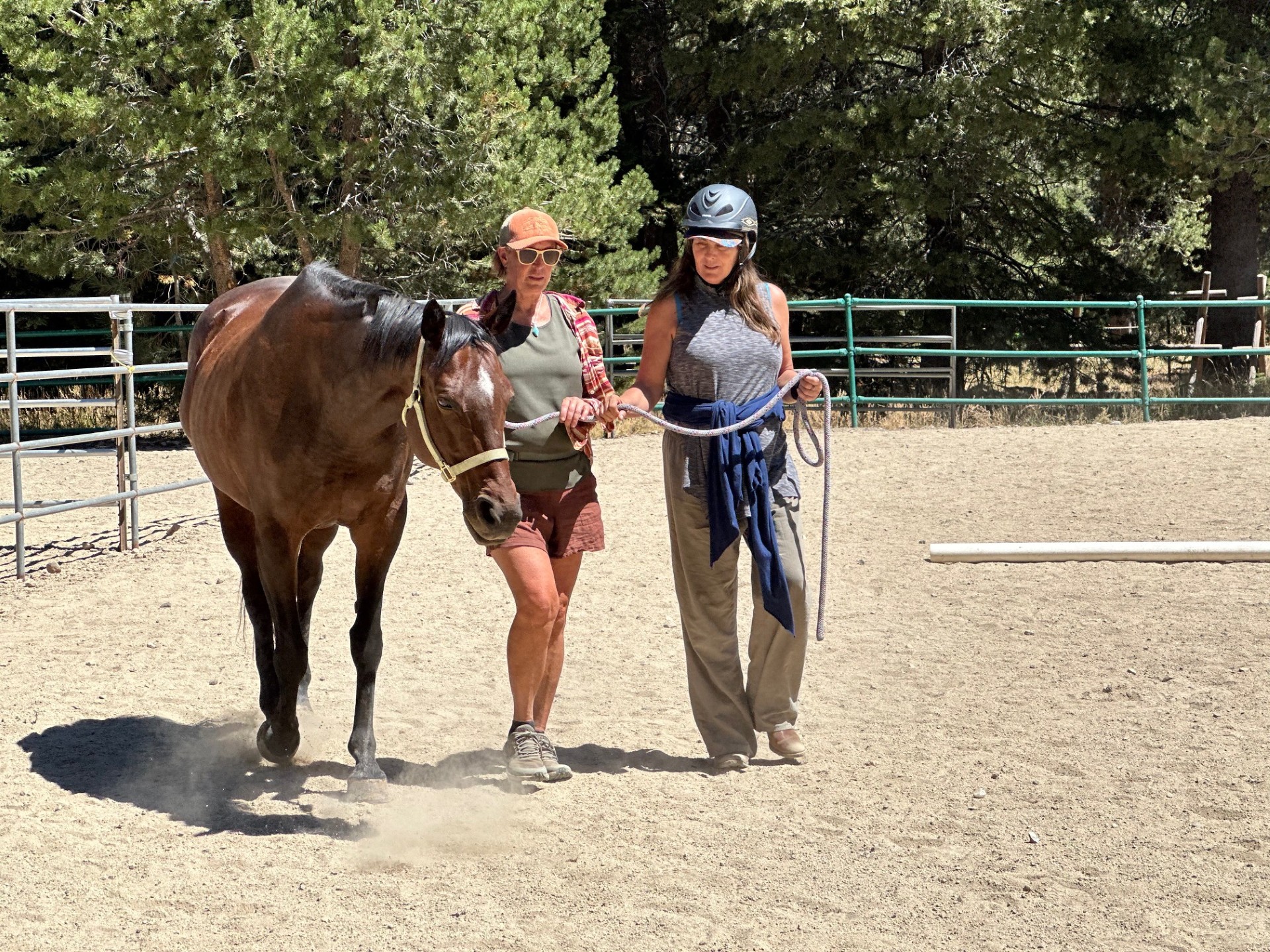
This summer, Achieve Tahoe launched the first Equine Program in Tahoe for Cancer Survivors.
Strides Through Resilience is a supportive space for individuals navigating their healing journey and reclaiming vitality during or after cancer treatment. Set in the serene Sierra Nevada mountains, the program invites participants to connect with horses and tap into pathways for strength, renewal, and lasting ease.
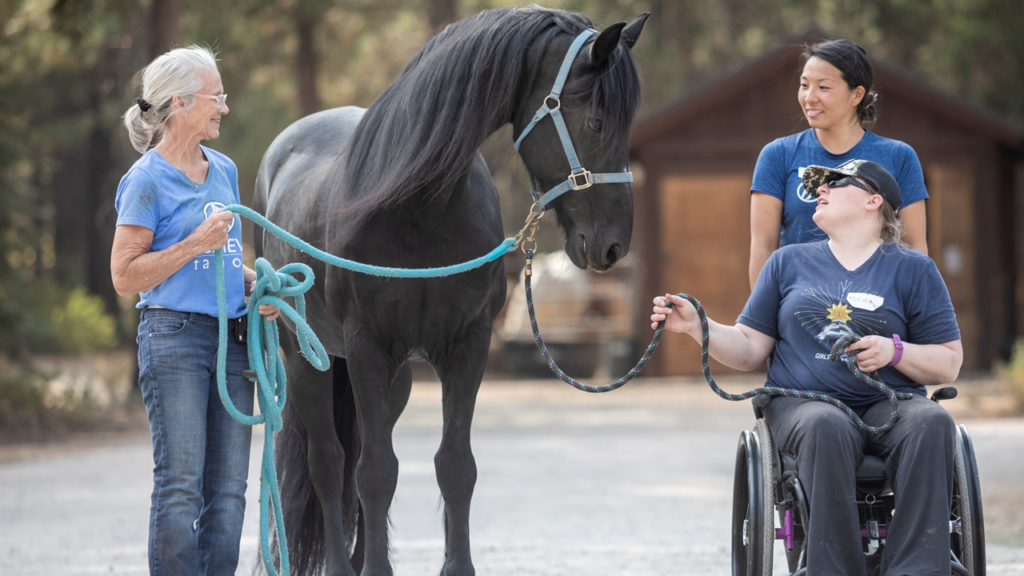
This is a pilot offering of the Achieve Tahoe Adaptive Horsemanship Program, which began about six years ago and is rooted in the rich history and deep connection to horses that has long been part of the Truckee community. The adaptive program was created to serve the entire Achieve Tahoe community, ensuring that all individuals, regardless of ability, background, or physical dynamic, can interact with and benefit from being around equines in a safe, welcoming, and meaningful way.
While the Adaptive Horsemanship Program started mainly with riding and mounted lessons, it quickly became clear how vital it was to develop pathways that met people’s needs, whether or not they could or wanted to mount a horse. That realization led to a wider range of unmounted activities, opening the therapeutic power of horses to anyone facing fatigue, mobility challenges, or anxiety. Strides Through Resilience grew out of that work, and it is the first cancer survivorship program in the Tahoe community to incorporate horses.
Meet Your Guide: Irina Fedulow Plante

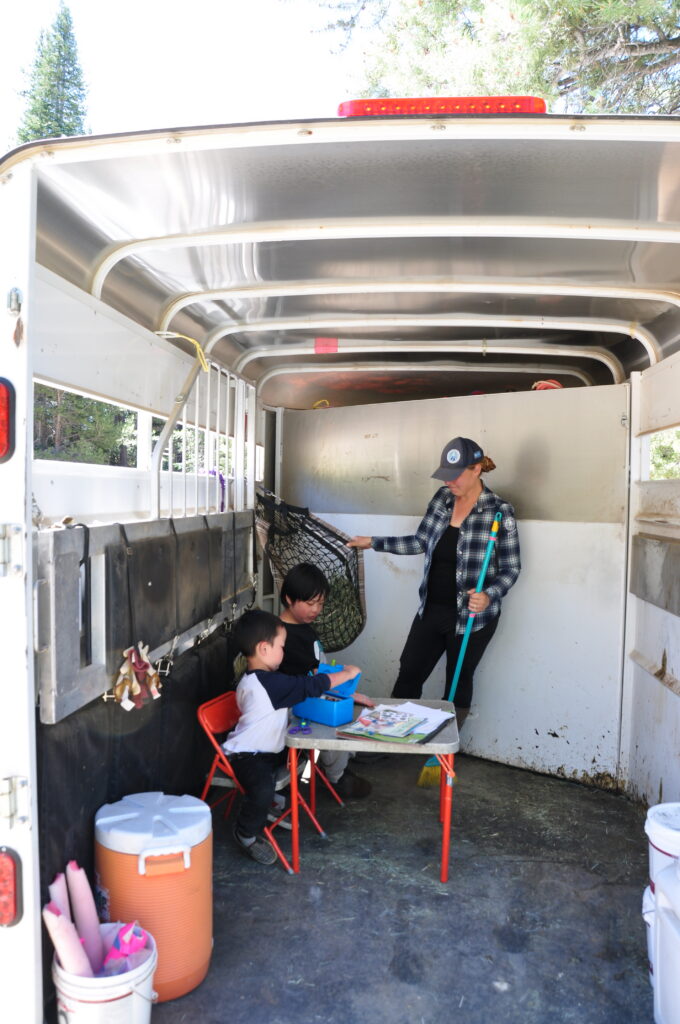
Strides Through Resilience is led by Irina Fedulow Plante, Achieve Tahoe’s equine program coordinator, who brings a rare blend of clinical expertise and lifelong horsemanship experience.
Irina is a physical therapist with board certification in neurologic physical therapy, and she has been incorporating equine movement (hippotherapy) into functional therapy goals for about ten years. She serves as research chair on the board of the American Hippotherapy Association, Inc., and she is currently completing both her Masterson Method Equine Specialist and Certified Therapeutic Riding Instructor (CTRI) credentials. She has been around horses since she could walk, growing up mostly in the endurance and Western riding worlds, and today she is enjoying learning dressage alongside Lilly, Achieve Tahoe’s very own horse. In addition to her clinical physical therapy work, where she also treats equestrians, Irina is a Registered Yoga Teacher with a certification in equine yoga, and she has had the privilege of presenting on various aspects of horsemanship at national and international conferences.
What Irina loves most about this role is the opportunity to bridge two of her greatest passions: empowering individuals in Achieve Tahoe’s community and partnering with horses in a way that respects them as true, active collaborators. Every single day brings new opportunities to learn and grow alongside participants, volunteers, and the herd. Beyond the physical and functional gains she witnesses, Irina is moved by watching horses act as living mirrors for human emotion, reminding us how to be present, grounded, and authentically connected to ourselves and the world around us.
Why Horses?
Horses are remarkably attuned to their surroundings, and their calm, steady presence can be powerful for people managing fatigue, uncertainty, or anxiety. Not every horse is suited to this work, though. It comes down to temperament: a calm disposition, emotional stability, adaptability to changing environments, and a genuine enjoyment of working with people.
Meet the Herd
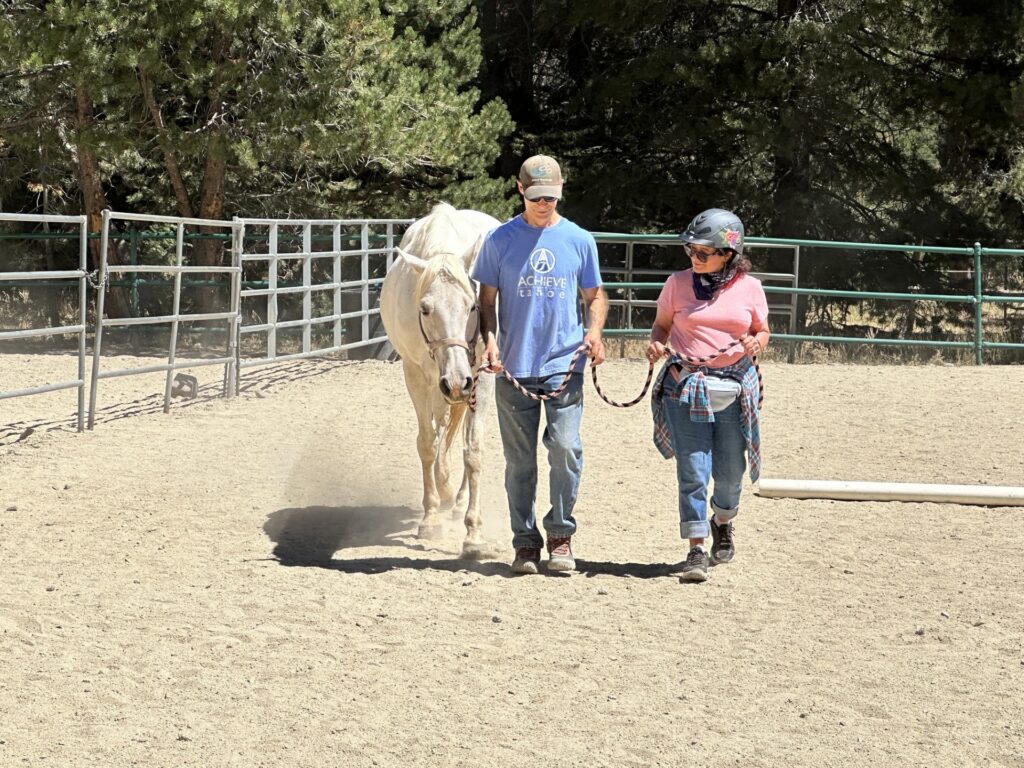
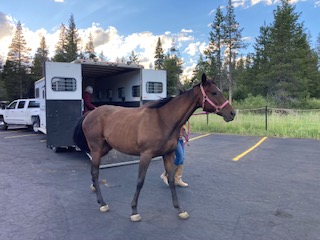
- Lilly, a 19-year-old Appendix (Thoroughbred and Quarter Horse) and former ranch horse, is smart, curious, and quick to tune in to each participant’s needs.
- Chica, a Quarter Horse who has been with the program since day one, is our lead mare. She cares for her participants with steady wisdom and patience.
- Reina brings a quiet, present energy, standing watchfully over participants and staff alike.
- Fox, our gentle giant, offers a kind, dependable presence.
What a Session Looks Like
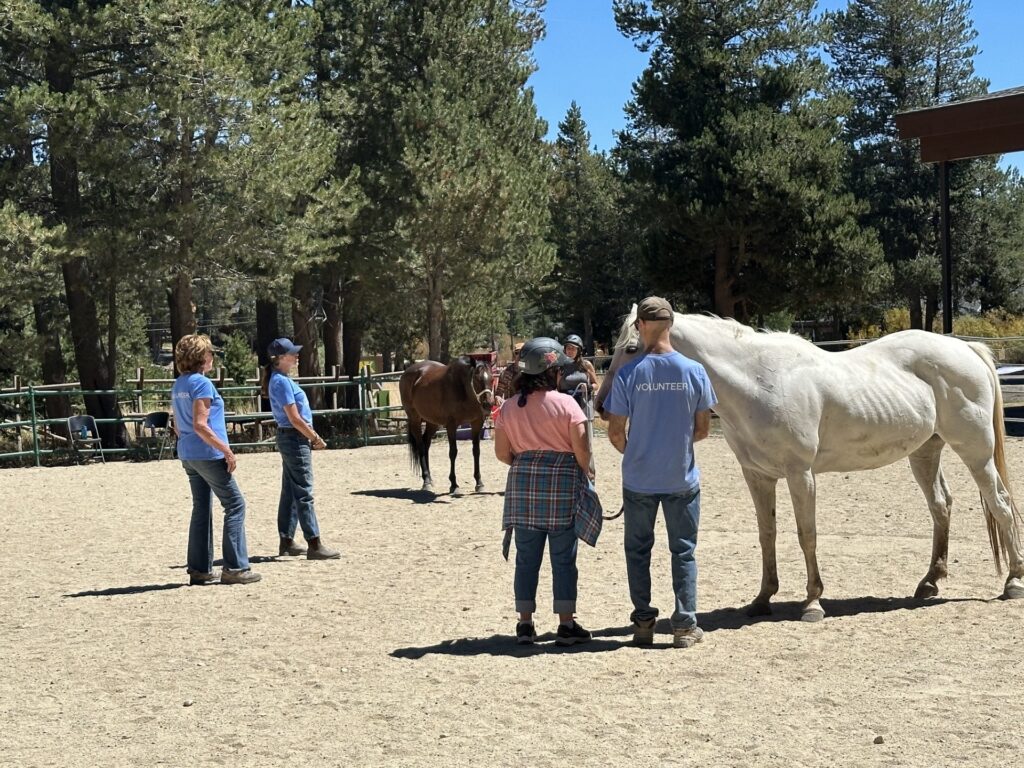
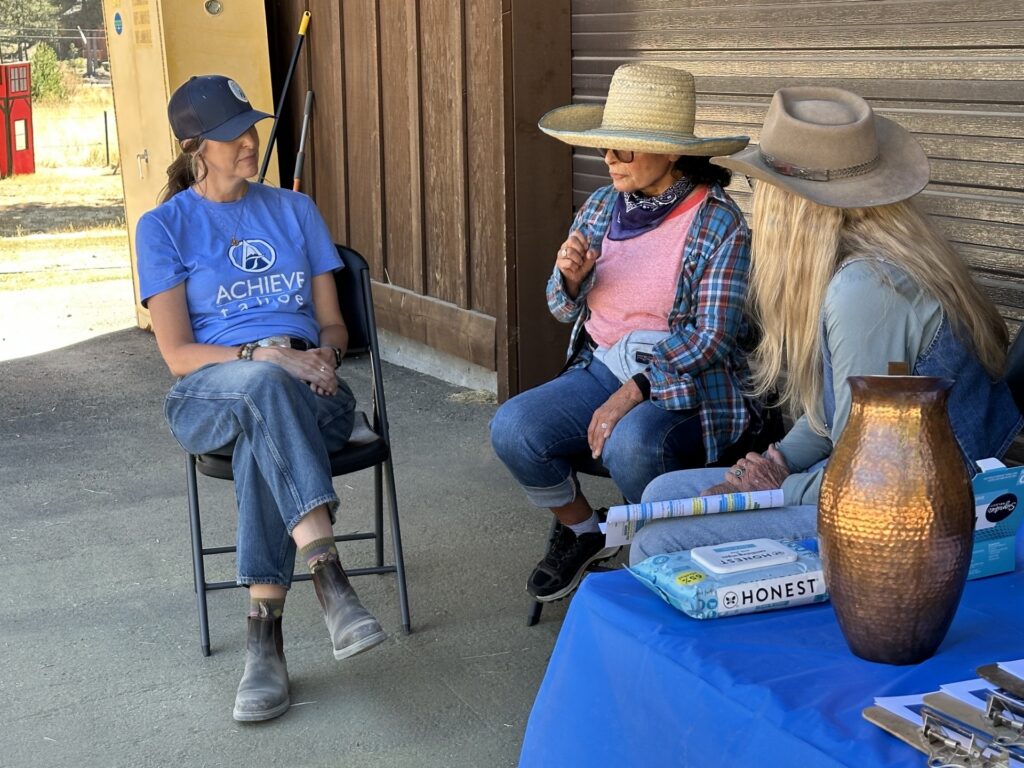
Each session is an intentional, step-by-step journey focused on safety, co-regulation, and progression:
- Arrive and check in. Participants complete a short survey on how they’re feeling, which lets us track changes across the program.
- Orient and observe. After a brief safety overview, we talk about herd dynamics and horse behavior through observation.
- Ground. Somatic grounding and qigong exercises begin outside the arena, then continue inside alongside the horses.
- Move and connect. Adaptive gentle movement, deep breathing, mindful grooming, and supervised leading with our instructor and volunteers.
- Explore. Working at liberty and mindful walking in the round pen, with horses switched depending on the activity and dedicated rest areas so everyone can honor their energy levels.
- Reflect. Quiet breaks and guided reflection throughout the day, closing with a group circle and a post-session survey.
Across the two-session progression, participants build on their skills and return to their favorite activities.
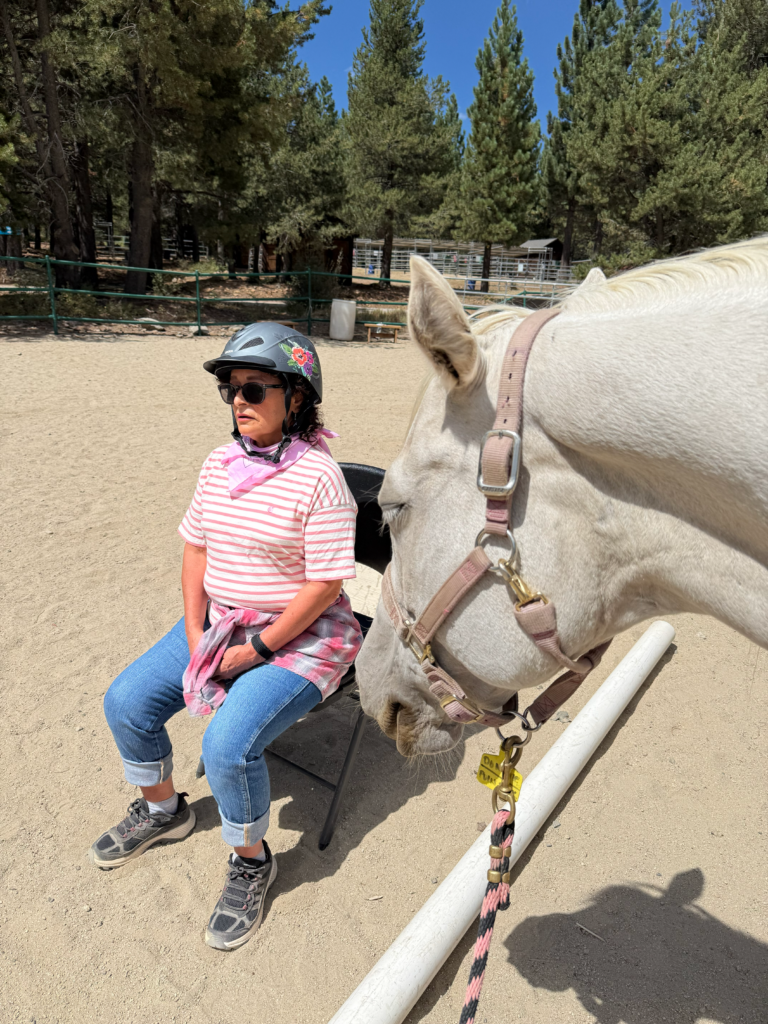
Reina, the horse joins participants to match their breathing while they meditate
A Small Group with a Big Bond
For the pilot season, we kept the cohort intentionally small: three women ages 50 to 65. Their experience with horses ranged from total beginners to those who had been around them earlier in life. They were also at different points in their cancer journeys. Some were in active treatment, and others were in various phases of remission.
Despite different diagnoses and timelines, the shared environment created an immediate bond. The small group size gave each participant space to move at her own pace, honor her energy on any given day, and find grounding and peer connection alongside the herd.
One participant arrived with no horse experience at all. Over the two sessions, she formed a quiet, powerful connection with Reina. Reina’s steady presence gave her a safe space to process her journey through remission and feel seen and grounded. After the second session, she was so moved that she wrote a poem, Wild Heart, inspired by Reina. She shared that learning alongside Reina taught her presence, resilience, and openness to an unfamiliar future.
Looking Ahead: In Irina’s Words

Looking ahead, Irina says her goal is to broaden how the community connects with the Achieve Tahoe Adaptive Horsemanship Program by expanding both mounted and unmounted pathways. While riding offers incredible physical benefits, the program’s unmounted work, which focuses on somatic grounding, breathwork, unmounted adaptive equine yoga, and herd observation, is equally transformative, especially for participants navigating fatigue, mobility challenges, or anxiety. The program will continue to look for creative opportunities in horsemanship so that all individuals can benefit from interacting with equines in a meaningful, accessible way. Building on its pilot cohorts for cancer survivors, veterans, and local youth, Achieve Tahoe plans to establish recurring seasonal series and inclusive family days where loved ones can experience that co-regulation and connection together.
Equally exciting is the effort to deepen how participants learn about nature through the “lens of the horse.” Horses have a heightened, nuanced awareness of their environment, and guiding participants through sensory trail walks and herd observation allows them to slow down and experience the Sierra ecosystem from a calm, grounded perspective. By pairing these community sessions with ongoing efforts to strengthen and support the herd, along with structured volunteer training and strong partnerships across regional healthcare networks, the program can grow sustainably, meet people where they are, and foster deep, lasting nervous system resilience.
Want to help bring Strides Through Resilience to more survivors? Donate Today!